Mechanics (இயக்கவியல்)

Mechanics (இயக்கவியல்)

Study Notes for UGTRB Physics

1. Newton’s Laws of Motion / நியூட்டனின் இயக்க விதிகள்

First Law (Law of Inertia) / முதல் விதி (நிலைம விதி)

Definition: A body continues to remain at rest or in uniform motion in a straight line unless acted upon by an external unbalanced force.

வரையறை: புறவிசை ஏதும் செயல்படாதவரை, ஒரு பொருள் தனது ஓய்வு நிலையிலோ அல்லது நேர்க்கோட்டில் அமைந்த சீரான இயக்க நிலையிலோ தொடர்ந்து இருக்கும்.

• Inertia of Rest (ஓய்வில் நிலைமம்): A body at rest remains at rest (e.g., Dust comes out when a carpet is beaten).
• Inertia of Motion (இயக்கத்தில் நிலைமம்): A moving body continues its motion (e.g., Passengers fall forward when a bus stops suddenly).
• Inertia of Direction (திசையில் நிலைமம்): A body resists change in its direction of motion.
Second Law / இரண்டாம் விதி

Definition: The rate of change of momentum is proportional to the applied force and acts in the same direction.

வரையறை: பொருளின் உந்த மாறுபாட்டு வீதம் அதன் மீது செயல்படும் விசைக்கு நேர்தகவில் இருக்கும். இவ்விசை உந்த மாறுபாடு நிகழும் திசையிலேயே செயல்படும்.

F = dp / dt
For constant mass: F = ma

• Greater Force: Higher acceleration.
• Greater Mass: Smaller acceleration.
Third Law / மூன்றாம் விதி

Definition: For every action, there is always an equal and opposite reaction. They act on two different bodies.

வரையறை: ஒவ்வொரு வினைக்கும் அதற்க்குச் சமமான மற்றும் எதிர் வினை உண்டு. வினையும் எதிர்வினையும் எப்போதும் இரு வேறு பொருள்களின் மீது செயல்படும்.

Examples: Recoil of a gun (துப்பாக்கி பின்னுதைத்தல்), Rocket motion (இராக்கெட் இயக்கம்).

2. Impulse / கணத்தாக்கு

Definition: Impulse is the product of a large force and a very short time interval.

வரையறை: மிகச்சிறிய கால இடைவெளியில் ஒரு பொருளின் மீது செயல்படும் மிகப்பெரிய விசை கணத்தாக்கு எனப்படும்.

J = ∫ F dt = Δp
(Change in momentum)
J = mv – mu

• Graph: The Area under the Force-Time (F-t) graph gives the Impulse.

• Applications: Airbags reduce force by increasing the time of impact. Cricket players move hands backward while catching a ball.
3. Collision & Impact / மோதல் மற்றும் மோதல் விதிகள்

3.1 Law of Conservation of Momentum / உந்த மாறா நிலை விதி:

The total momentum before collision is equal to the total momentum after collision. / புறவிசை ஏதும் செயல்படாத வரை, மோதலுக்கு முன்னுள்ள மொத்த உந்தமானது மோதலுக்குப் பின்னுள்ள மொத்த உந்தத்திற்குச் சமமாகும்.

m₁u₁ + m₂u₂ = m₁v₁ + m₂v₂

3.2 Newton’s Law of Restitution / நியூட்டனின் மீட்சியளிப்பு விதி:

Relative velocity of separation is directly proportional to the relative velocity of approach. / மோதலுக்குப் பின் விலகிச் செல்லும் சார்பு திசைவேகமானது, நெருங்கி வரும் சார்பு திசைவேகத்திற்கு நேர்தகவில் இருக்கும்.

Coefficient of Restitution (e):

e = (v₂ – v₁) / (u₁ – u₂)

3.3 Types of Collision / மோதல் வகைகள்:
Value of ‘e’ Type of Collision மோதல் வகை
e = 1 Elastic Collision மீட்சி மோதல்
0 < e < 1 Inelastic Collision மீட்சியற்ற மோதல்
e = 0 Perfectly Inelastic முழுமையான மீட்சியற்ற மோதல்
1. Elastic Collision / மீட்சி மோதல்:

Momentum and Kinetic Energy are conserved. No energy loss. / உந்தம் மற்றும் இயக்க ஆற்றல் மாறாது.

2. Inelastic Collision / மீட்சியற்ற மோதல்:

K.E. is not conserved (lost as heat/sound). / இயக்க ஆற்றல் இழப்பு ஏற்படும்.

3. Perfectly Inelastic / முழுமையான மீட்சியற்ற மோதல்:

Bodies stick together and move with common velocity. / பொருள்கள் ஒன்றாக ஒட்டிக்கொள்ளும்.

Note: In a Perfectly Inelastic Collision (e=0), the two bodies stick together after impact and move with a common velocity.
(முழுமையான மீட்சியற்ற மோதலில், இரு பொருள்களும் மோதலுக்குப் பின் ஒன்றாக ஒட்டிக்கொண்டு ஒரே திசைவேகத்தில் நகரும்).

3.4 Direct Collision (Head-on) / நேர் மோதல்:

Bodies move along the same straight line before and after impact.

v₁ = [ (m₁u₁ + m₂u₂) – m₂e(u₁ – u₂) ] / (m₁ + m₂)
v₂ = [ (m₁u₁ + m₂u₂) + m₁e(u₁ – u₂) ] / (m₁ + m₂)
3.5 Oblique Collision / சாய்வு மோதல்:

Bodies collide at an angle. Resolved into two components:

  • Along the line of impact: Velocity changes.
  • Perpendicular to line: Velocity remains unchanged.

4. Loss of Kinetic Energy / இயக்க ஆற்றல் இழப்பு

Loss of K.E. during Collision / மோதலின் போது ஏற்படும் ஆற்றல் இழப்பு:

In inelastic collisions, some kinetic energy is lost in the form of heat, sound, or deformation. / மீட்சியற்ற மோதல்களின் போது, இயக்க ஆற்றலின் ஒரு பகுதி வெப்பம், ஒலி அல்லது உருமாற்றமாக இழக்கப்படுகிறது.

The loss of Kinetic Energy is given by:

ΔK = [ m₁m₂ / 2(m₁ + m₂) ] × (1 – e²) (u₁ – u₂)²
Condition (நிலை) Energy Loss (ஆற்றல் இழப்பு)
Elastic Collision (e = 1) Zero Loss (இழப்பு இல்லை)
Perfectly Inelastic (e = 0) Maximum Loss (அதிகபட்ச இழப்பு)

5. Interacting Bodies & Centre of Gravity / ஒன்றோடொன்று செயல்படும் பொருள்கள் மற்றும் ஈர்ப்பு மையம்

5.1 Motion of Two Interacting Bodies / இரு பொருள்களின் இயக்கம்:

The motion of two bodies interacting with each other can be simplified using Reduced Mass (μ).

μ = (m₁m₂) / (m₁ + m₂)

5.2 Centre of Gravity (CG) / ஈர்ப்பு மையம்:
Shape (பொருள்) Position of CG (ஈர்ப்பு மையத்தின் இடம்)
Solid Hemisphere (திண்ம அரைக்கோளம்)3R / 8
Hollow Hemisphere (உள்ளீடற்ற அரைக்கோளம்)R / 2
Solid Cone (திண்மக் கூம்பு)h / 4
Tetrahedron (நான்முகி)h / 4
5.3 Friction / உராய்வு:
  • Static Friction (நிலை உராய்வு): பொருள் நகரத் தொடங்கும் முன் இருக்கும் உராய்வு.
  • Kinetic Friction (இயக்க உராய்வு): பொருள் நகரும் போது இருக்கும் உராய்வு.
  • Angle of Friction (θ): tan θ = μ.

6. Equilibrium of Rigid Bodies / திண்மப் பொருள்களின் சமநிலை

A rigid body is said to be in mechanical equilibrium if both its linear momentum and angular momentum remain constant.

(ஒரு திண்மப் பொருளின் நேர்க்கோட்டு உந்தம் மற்றும் கோண உந்தம் மாறாமல் இருந்தால், அது இயந்திரச் சமநிலையில் இருப்பதாகக் கருதப்படும்.)

  • Translational Equilibrium (ΣF = 0): நேர்க்கோட்டு இயக்கச் சமநிலை.
  • Rotational Equilibrium (Στ = 0): சுழற்சி இயக்கச் சமநிலை.

7. Moment of Inertia / நிலைமத் திருப்புத்திறன்

7.1 Angular Momentum and Kinetic Energy:

Angular Momentum (L)

L = Iω

Rotational K.E

K.E = ½ Iω²

7.2 Moment of Inertia of Sphere, Shell, and Cylinder:
Shape (பொருள்) Moment of Inertia (I)
Solid Sphere (திண்மக் கோளம்)(2/5) MR²
Spherical Shell (கோள ஓடு)(2/3) MR²
Solid Cylinder (திண்ம உருளை)(1/2) MR²
7.3 Parallel Axes Theorem:

I = IG + Mh²

7.4 Perpendicular Axes Theorem:

Iz = Ix + Iy

8. Kepler’s Laws of Planetary Motion / கெப்ளரின் கோள் இயக்க விதிகள்

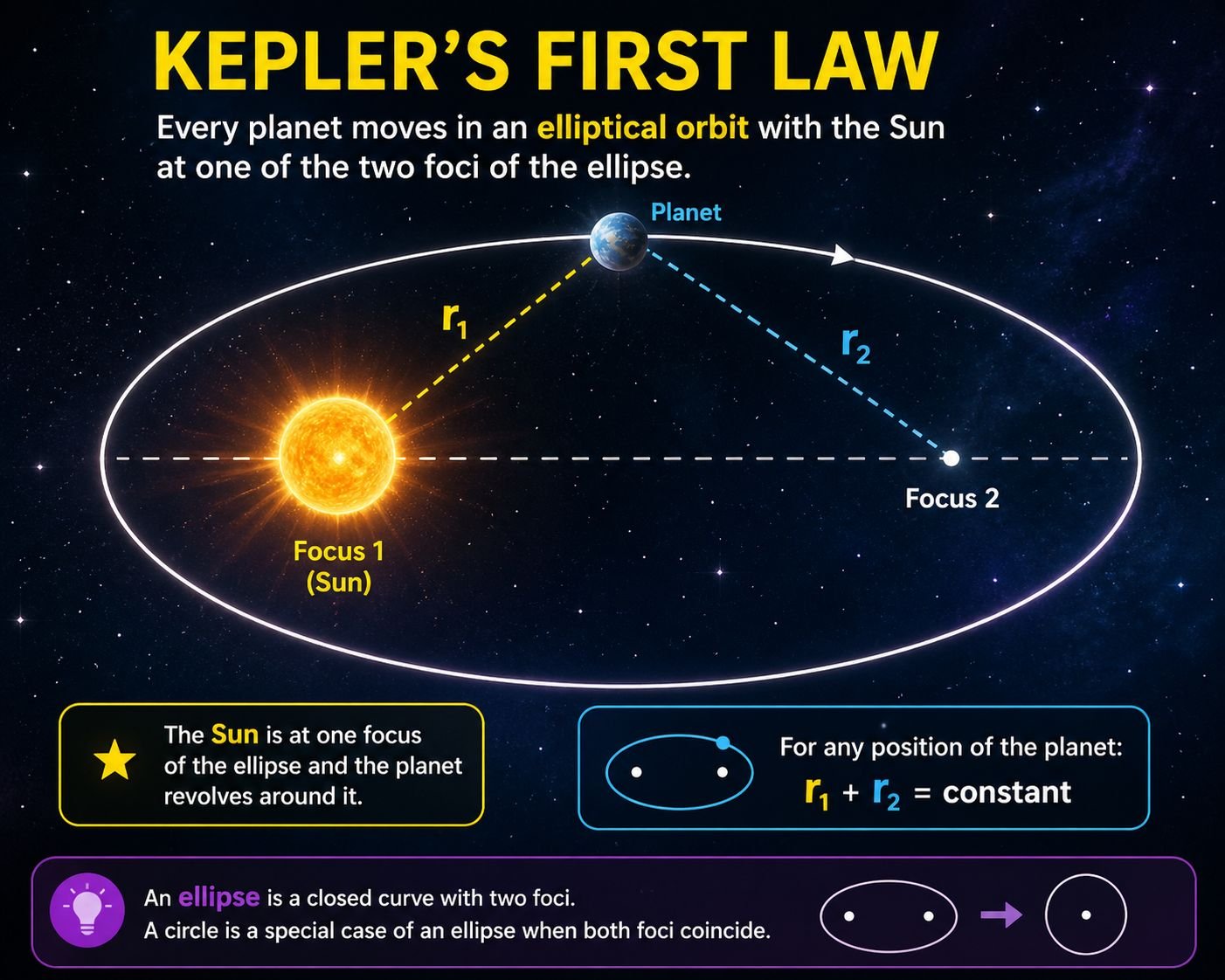
  • 1. Law of Orbits (சுற்றுப்பாதை விதி):

    All planets move in elliptical orbits with the Sun at one focus. (அனைத்து கோள்களும் சூரியனை ஒரு குவியப் புள்ளியில் கொண்டு நீள்வட்டப் பாதையில் சுற்றி வருகின்றன.)

    Kepler's First Law
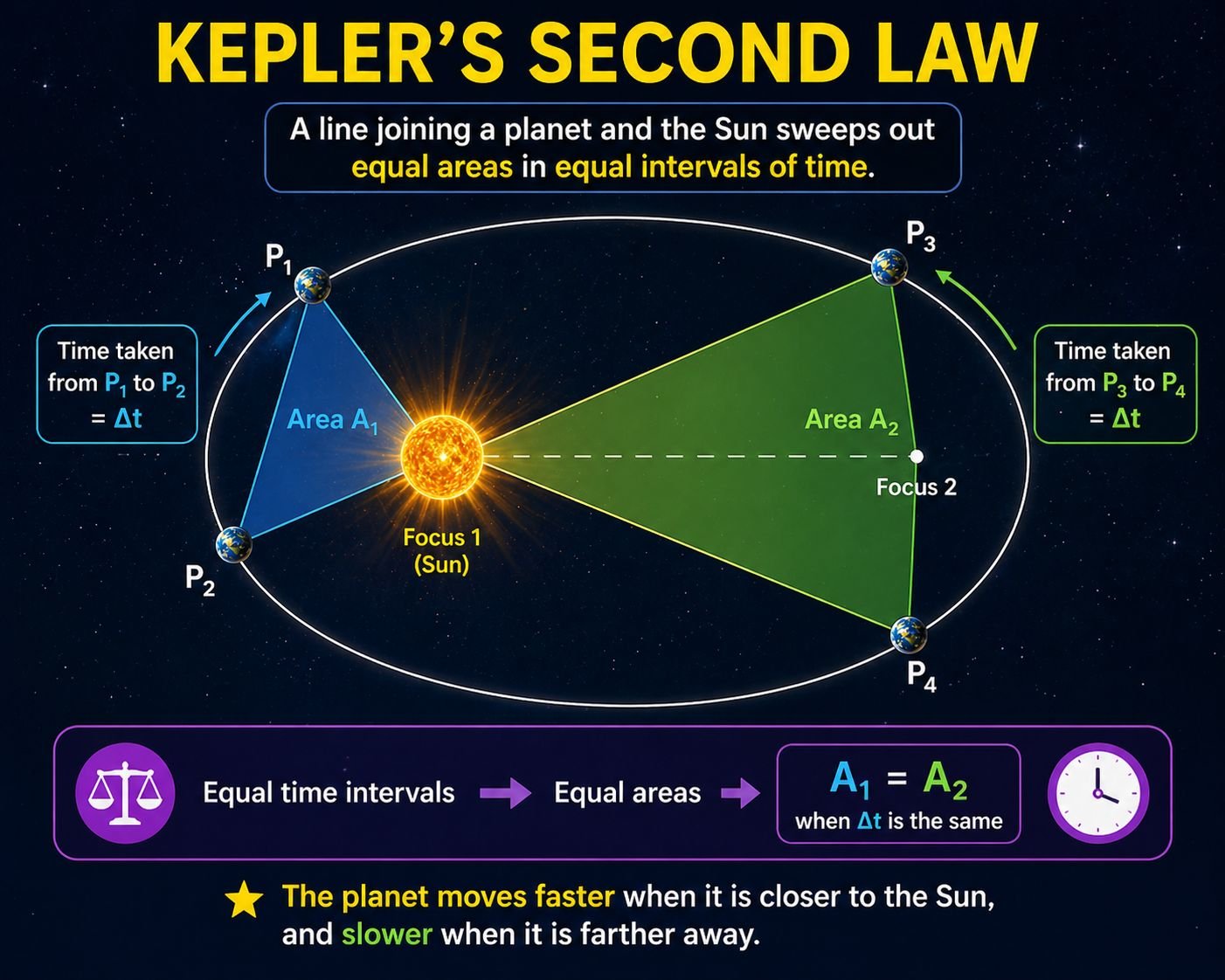
  • 2. Law of Areas (பரப்பு விதி):

    A line segment joining a planet and the Sun sweeps out equal areas during equal intervals of time. (கோளையும் சூரியனையும் இணைக்கும் கோடு சம கால இடைவெளியில் சம பரப்புகளைக் கடக்கும்.)

    Kepler's Second Law
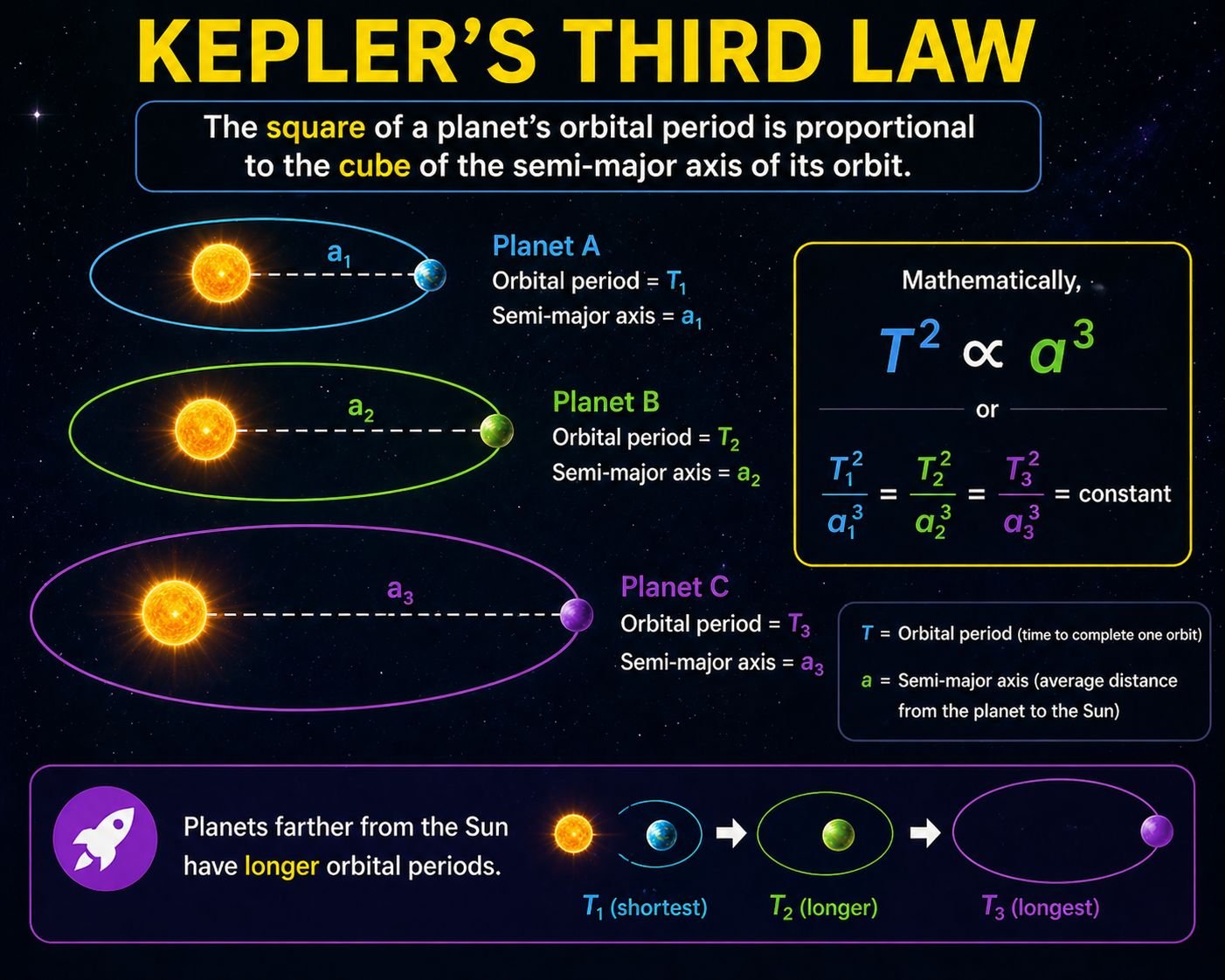
  • 3. Law of Periods (சுற்றுக் கால விதி):

    The square of the orbital period (T) is proportional to the cube of the semi-major axis (r). (கோள்களின் சுற்றுக் காலத்தின் இருமடி, அவற்றின் சராசரித் தொலைவின் மும்மடிக்கு நேர்தகவில் இருக்கும்.)

    T² ∝ r³
    Kepler's Third Law

9. Gravitation & Satellites / ஈர்ப்பு விசை மற்றும் செயற்கைக்கோள்கள்

Every particle in the universe attracts every other particle with a force directly proportional to the product of their masses and inversely proportional to the square of the distance between them.

(நிறைகளின் பெருக்கற்பலனுக்கு நேர்தகவிலும், அவற்றிற்கு இடையேயான தொலைவின் இருமடிக்கு எதிர்தகவிலும் உள்ள விசை.)

F = G (m₁m₂ / r²)

Value of G: 6.67 × 10⁻¹¹ N m² kg⁻²

9.1 Determination of G by Boy’s Method:

The Principle (கொள்கை): The method uses a torsion balance.
(இது முறுக்குத் தராசு கொள்கையின் அடிப்படையில் செயல்படுகிறது.)

9.2 Factors Affecting Acceleration due to Gravity (g):
1. Shape of the Earth:

Poles: ‘g’ is Maximum | Equator: ‘g’ is Minimum.

2. Altitude / Height:

g’ = g [ 1 – 2h/R ]

3. Depth:

g’ = g [ 1 – d/R ] (At Center: g = 0)

4. Rotation:

g’ = g – Rω² cos²λ

9.3 Orbital & Escape Velocities:
Escape Velocity (vₑ)11.2 km/s
Orbital Velocity (vₒ)7.9 km/s

10. Limitations of Newton’s Laws / நியூட்டன் விதிகளின் வரம்புகள்

Newton’s laws are perfect for our everyday world, but they fail in extreme conditions.
(தினசரி வாழ்வில் நடக்கும் நிகழ்வுகளுக்கு நியூட்டனின் விதிகள் சரியாக இருந்தாலும், சில அதீத சூழ்நிலைகளில் இவை தோல்வியடைகின்றன.)

1. The Very Small (Quantum Scale)

Does not work for subatomic particles.

2. The Very Fast (Relativistic Scale)

Near the speed of light.

முக்கியமான கொள்குறி வினாக்கள் (MCQs)

அலகு 1: இயந்திரவியல் பாடப்பகுதியிலிருந்து கேட்கப்படும் மிக முக்கியமான வினாக்களைப் பயிற்சி செய்து பாருங்கள்.

🚀 Take Test Now / தேர்வு எழுதுக